
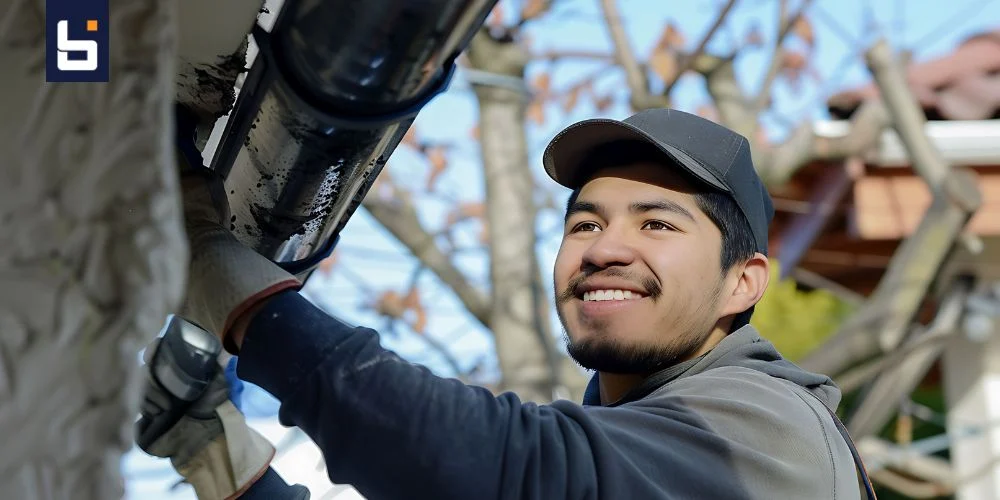
A hailstorm rolls through at 6 p.m., and by 6:15 homeowners are staring at dented gutters. They grab their phones within the hour. Whoever answers first usually wins the job, and whoever does not answer spends the following week calling back voicemails from people who already signed elsewhere. That single window is why a reliable gutter company answering service has stopped being a nice extra and become the backbone of storm-season survival.
Why Storm Season Breaks Every Gutter Company’s Phone Line
Storm season does not create a gentle uptick in calls. It creates a flood. Call volume can spike 500 to 1,000 percent within 24 hours of a major hailstorm or wind event, and gutter companies feel that surge just as hard as roofers do. Homeowners typically start calling within hours of a storm, often the same evening or the next morning, which means the surge hits long before the office even opens. A three-person team that normally handles fifteen calls a day suddenly faces eighty, and nobody planned a shift schedule around that.
The timing makes everything worse. After major storms, home service companies routinely miss 50 to 70 percent of incoming calls, compared to roughly 27 percent during normal weeks, simply because homeowners refuse to sit on hold or leave a voicemail. They want confirmation, not a promise to call back. Meanwhile, three competitors down the street are dialing the same neighborhood, and the first company to answer usually books the inspection.
The Hidden Price Tag Behind Every Unanswered Gutter Call
Owners often underestimate what a missed call actually costs. A missed call costs the average home service business $285 or more in lost revenue, based on typical job values, and gutter replacement or storm repair jobs frequently run well above that baseline. Multiply that number by dozens of missed calls during a single storm week, and the losses stop looking like rounding errors.
Aaron Boatin, president of Ambs Call Center, summed up the stakes bluntly: “Every missed call is more than just a number.” He is right, and gutter companies feel that truth acutely during storm season, since a missed call rarely comes back around. About 85 percent of callers who cannot reach a live person will not call back, choosing instead to dial whoever answers next. That is not customer disloyalty. That is simple human impatience during an emergency.
Exterior Contractor Call Handling Cannot Run on One Overworked Office Manager
Most gutter and exterior companies rely on one office manager or the owner’s spouse to answer everything. That system works fine in March. It collapses completely in a storm surge. Exterior contractor call handling during peak weather requires more hands than any small office naturally has.
The estimator problem compounds this further. A roofing or exterior company relying on its lead estimator to also answer phones finds that estimator unreachable during a surge, since they are already on a roof or on another call Forwarding calls to a cell phone does not fix this. It just moves the same overwhelmed person to a different device.
Home Services After-Hours Support Turns Midnight Calls Into Morning Appointments
Storms rarely respect business hours, and neither do the homeowners reacting to them. Home services after-hours support exists precisely for the 9 p.m. calls that would otherwise roll straight to voicemail. Nearly half of all home service inquiries arrive before 8 a.m., after 6 p.m., or on weekends, which means a company without evening coverage is structurally missing close to half its opportunity. A trained after-hours team answers, gathers the details, and locks in a slot before the homeowner even thinks about calling a competitor.
Gutter Installation Appointment Setting: Where the Real Revenue Hides
Answering the phone is only half the job. Gutter installation appointment setting is where a good call actually converts into a signed inspection. A trained agent asks the right questions about damage type, roof access, and insurance status, then books the visit directly onto the crew’s calendar instead of leaving a sticky note for someone to “follow up later.” That difference alone often separates a booked week from a wasted one.
Speed matters just as much as accuracy here. Responding to a lead within five minutes makes a business roughly 21 times more likely to qualify that lead compared to waiting thirty minutes, and by the thirty-minute mark, 79 percent of leads have already moved on Therefore, a scheduling process that takes hours instead of minutes is quietly bleeding revenue every single storm week.
Real Storms, Real Numbers
An April 2026 hailstorm in Omaha offers a clear illustration of the stakes. A 2.5-inch hailstorm with 70 mph winds affected roughly 15,000 roofs across the metro area, and call volume exploded to 60 to 80 inbound calls within a single morning window, according to Talkroute’s breakdown of the event. Companies without surge staffing simply could not keep up, while properly staffed teams booked inspections through the entire following week.
A second example drives the point home even harder. One contractor generated $250,000 in revenue from just 14 after-hours calls once a proper answering system was in place, based on a case documented. Fourteen calls sounds almost comically small next to that revenue figure, and yet it perfectly captures how much value sits inside calls that most companies never answer.
What Separates a Good Answering Partner From a Generic Call Center
Not every call center understands gutters, siding, or storm claims, and that gap shows up fast on a live call. A strong partner trains agents on your specific service area, damage terminology, and booking rules before the first storm ever hits. Generic scripts built for pizza orders simply do not translate to a homeowner describing a dented downspout at 11 p.m.
Setup timing matters too. Waiting until a storm is forecast is far too late, since proper training and CRM integration take roughly a week to complete correctly. Consequently, smart operators lock in their answering partner in late winter, long before the first spring hailstorm forms.
The Debate: Human Agents, AI, or Both?
Plenty of owners argue AI tools can handle the entire surge alone, and there is real merit to that during extreme spikes. AI never sleeps and can field hundreds of simultaneous calls. However, homeowners staring at storm damage often want a real human voice, not a synthetic one reciting a script. The strongest setups blend both, letting AI absorb initial volume while trained agents handle emotionally charged insurance conversations. That combination tends to produce the highest booking rates during genuine chaos.
Ready for the Next Storm to Ring Like an Opportunity?
Every storm season creates a short, brutal window where the fastest company wins the neighborhood. Boomsourcing builds gutter company answering service programs specifically for that window, pairing trained agents with fast, accurate appointment setting so no midnight call ever slips into voicemail. If your team dreads the sound of a ringing phone during storm week, it might be time to make that sound profitable instead.


 Connect WITH US


 By Nathan Brown

 By Rajesh Adhikary