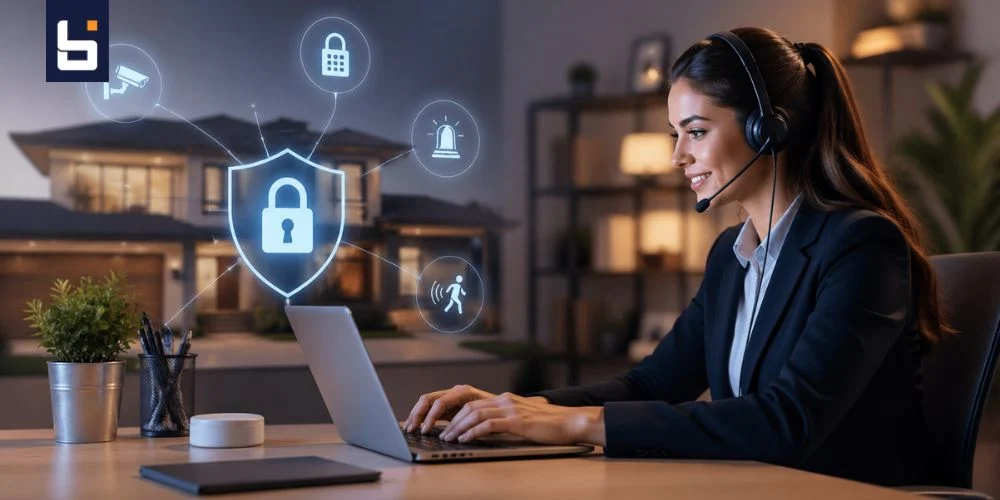
Home security lead generation has shifted from simple call intake to a precision revenue engine. Today, contact centers shape how home security leads become scheduled installations. Companies that rely on inbound home security leads and home security system sales leads now compete on speed, data, and trust. As a result, security leads must be qualified, nurtured, and converted through structured workflows that reduce friction and increase booking rates.
At the same time, buyers expect instant answers and tailored recommendations. Therefore, contact centers play a critical role in converting paid on install home security leads into confirmed appointments. This shift has changed how organizations evaluate ROI, agent performance, and technology investments. Modern programs align marketing, data enrichment, and agent training to ensure each inquiry moves forward without delay.
Moreover, industry benchmarks show that response time directly impacts conversion. According to a Harvard Business Review study, companies that respond within five minutes are 100 times more likely to connect with prospects. That insight has reshaped how inbound home security leads and security leads are handled across high-performing contact centers.
How Home Security Leads Convert into Booked Installs
Inquiry
Inbound traffic & inquiries
Contact
Response within minutes
Qualification
15–25% are ready
Appointment
Meeting scheduled
Install
Revenue realized
The evolution of home security leads into revenue opportunities
The journey from inquiry to installation now involves multiple touchpoints. However, not all home security leads carry equal intent. Some prospects explore options, while others are ready to book immediately. Therefore, effective home security lead generation relies on segmentation and prioritization.
Understanding lead intent and qualification
Contact centers now use behavioral data, source attribution, and real-time validation to qualify home security system sales leads. For example, a lead from a comparison site behaves differently from a referral lead. According to Salesforce research, 79% of customers expect consistent interactions across departments.
This expectation drives the need for integrated systems that unify inbound home security leads across channels. Agents can access history, preferences, and urgency signals before the first conversation begins.
Speed-to-lead as a competitive advantage
Speed determines whether a lead converts or disappears. Therefore, high-performing contact centers deploy automated routing and callback systems. These systems ensure that security leads reach the right agent within seconds.
A real-world example comes from ADT’s internal optimization initiatives, where reducing response time increased appointment rates significantly. While the numbers vary, the principle remains consistent: faster engagement leads to higher conversions.
Turning inbound home security leads into booked installs
The transition from inquiry to appointment requires more than a scripted conversation. It demands empathy, clarity, and structured persuasion. Therefore, contact centers train agents to guide prospects through decision-making without pressure.
Impact of Response Time on Lead Conversion
Within 1 min
5 mins
30 mins
1+ hour
Faster response increases conversion probability significantly.
Building trust during the first interaction
Trust remains the cornerstone of home security lead generation. Prospects share personal concerns about safety, which makes the conversation sensitive. Agents must address these concerns while presenting solutions clearly.
Industry expert Shep Hyken once said, “Customers don’t just want service, they want confidence in their decision.” This insight applies directly to handling inbound home security leads.
Structuring conversations for higher conversions
Successful agents follow a consultative approach rather than a transactional one. They ask relevant questions, identify pain points, and recommend tailored packages. As a result, home security system sales leads move closer to booking.
Contact centers also use real-time prompts and AI-driven guidance tools to support agents. These tools suggest responses, highlight objections, and recommend next steps during calls.
Appointment setting as the conversion milestone
The ultimate goal is not just a sale, but a confirmed installation appointment. Therefore, agents must handle objections related to pricing, scheduling, and trust.
Programs that focus on paid on install home security leads often align incentives with completed installs. This alignment ensures that agents prioritize quality over volume.
Data, technology, and the future of security leads
Technology now defines how effectively contact centers manage home security leads. From predictive dialing to AI-driven analytics, the landscape continues to evolve rapidly.
Contact Center Conversion Benchmarks
Leveraging AI and analytics for smarter lead management
Modern platforms analyze call patterns, customer sentiment, and conversion data. These insights help refine scripts, improve targeting, and optimize performance.
For example, McKinsey reports that companies using advanced analytics can improve marketing ROI by up to 20%. This improvement directly impacts home security lead generation outcomes.
Integrating omnichannel communication
Customers interact through calls, chats, emails, and social platforms. Therefore, contact centers must integrate these channels to manage inbound home security leads effectively.
Omnichannel systems ensure that prospects receive consistent messaging regardless of the channel. This consistency builds trust and increases the likelihood of conversion.
The role of proprietary contact center technology
Advanced contact center platforms now include features like real-time call guidance, automated lead scoring, and performance dashboards. These tools help agents focus on high-value security leads.
Technologies similar to AI-powered voice systems and soundboard integrations enable agents to respond faster and more accurately. These innovations reduce handling time while improving customer experience.
Why outsourcing home security lead generation is gaining traction
Many companies now outsource home security lead generation to specialized contact centers. This shift allows them to scale operations without increasing internal complexity.
Access to trained agents and proven workflows
Outsourcing partners bring experience, training frameworks, and optimized processes. Therefore, they can handle home security system sales leads more efficiently than in-house teams.
Cost efficiency and scalability
Outsourcing reduces fixed costs while enabling rapid scaling during peak demand. This flexibility proves valuable for campaigns focused on paid on install home security leads.
Focus on core business operations
By outsourcing, companies can focus on product development, marketing, and customer experience. Meanwhile, contact centers manage inbound home security leads and appointment setting.
60%
Leads are not qualified
3X
Higher conversions with follow-up
900%
Higher contact rate within 5 minutes
Home security lead generation has become a sophisticated process driven by data, speed, and human interaction. Contact centers now play a central role in transforming home security leads into booked installations. Companies that invest in structured workflows, advanced technology, and skilled agents consistently outperform competitors.
As the market evolves, the ability to convert inbound home security leads into confirmed appointments will define success. Organizations that embrace this shift will not only increase revenue but also build lasting customer trust.
If you are evaluating how to scale your pipeline, now is the time to rethink your approach to home security lead generation, home security leads, inbound home security leads, security leads, home security system sales leads, and paid on install home security leads. A well-structured contact center strategy can turn every inquiry into a measurable growth opportunity.


 Connect WITH US

 By Nathan Brown

 By Anik Banerjee