
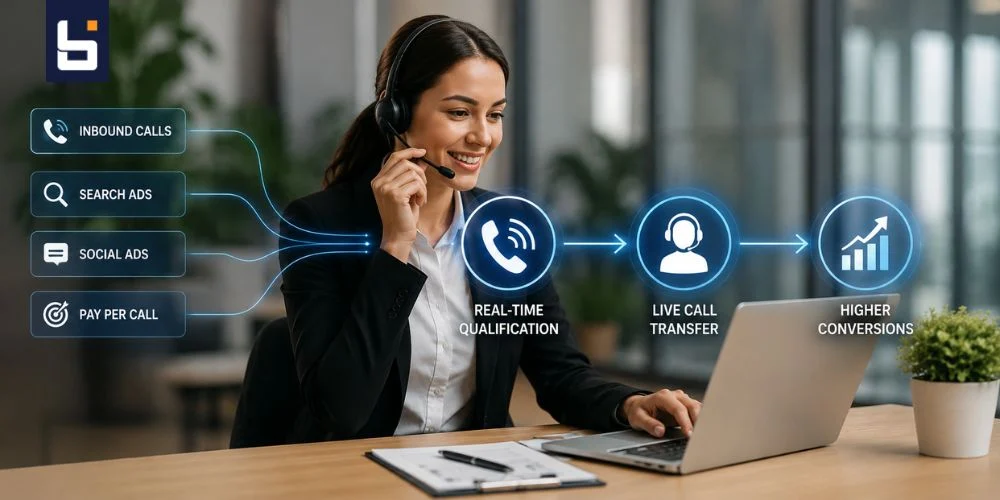
A prospect requesting an auto insurance quote may be comparing several providers, evaluating coverage options, or preparing to switch insurers. If that prospect cannot reach an appropriate agent when they are ready to talk, the opportunity can lose momentum before a meaningful sales conversation begins.
The challenge for insurance agencies is not simply generating inquiries. It is connecting qualified prospects with the right representative, capturing relevant information, and ensuring every interaction has a clear next step.
According to J.D. Power’s 2026 U.S. Insurance Shopping Study, consumers obtained an average of 3.5 quotes while shopping for insurance. With customers comparing multiple options, agencies need a dependable process for handling interested prospects.
Live call transfer services can help businesses connect qualified callers with sales representatives during the same interaction. However, successful transfers depend on more than routing a phone call. Qualification, agent availability, handoff quality, and follow-up all influence what happens next.
For auto insurance agencies, these operational details can determine whether an interested caller becomes a productive sales conversation or another missed opportunity.
Live Call Transfer Services vs. Traditional Lead Models
Traditional lead workflows typically capture an inquiry and pass the prospect’s details to a sales team for later contact. This model can be effective when customers prefer callbacks or when a more involved sales process requires preparation.
Live transfers take a different approach. After the prospect meets predefined qualification criteria, the call is routed to an appropriate representative while the conversation is still active.
From inquiry to agent connection
Compare how each workflow handles initial engagement, qualification, and failed connections.
| Factor | Traditional lead workflow | Live call transfer |
|---|---|---|
| Initial engagement | Follow-up may happen later. | An immediate connection is attempted. |
| Qualification | May occur during subsequent contact. | Can happen before the transfer. |
| Agent interaction | Depends on successful outreach. | Begins when the transfer is accepted. |
| Handoff information | Details are recorded for later follow-up. | Relevant context is shared with the receiving agent. |
| Failed connection | Requires subsequent outreach. | Requires a defined recovery process. |
Important: Live transfers are not guaranteed to convert better in every situation. Outcomes depend on qualification quality, agent availability, handoff execution, and follow-up.
Neither model is automatically better for every business. Live transfers are particularly useful when a prospect is ready for a direct conversation and a suitable representative is available. Traditional follow-up may be more appropriate when the customer is unavailable or wants to schedule a conversation.
The important question is not simply which model produces more calls. It is which process helps the business connect the right prospects to the right team efficiently.
Why Qualified Calls Fail Before Reaching an Agent
A prospect can meet the qualification criteria and still fail to reach the intended representative. For auto insurance agencies, four operational problems deserve particular attention.
1. Qualification does not match the receiving team’s requirements
A caller may express interest in coverage without meeting the agency’s service-area, product, or eligibility requirements. If the initial screening process is inconsistent, agents can spend valuable time handling unsuitable inquiries.
Businesses should establish clear qualification criteria before routing calls. For insurance inquiries, the process might confirm the prospect’s general coverage needs, location, and readiness to discuss a quote. Sensitive information should be collected only when necessary and through approved procedures.
When screening is the bottleneck, lead qualification services can support a more consistent process for checking inquiries against agreed requirements.
2. No suitable agent is available
A transfer attempt may fail because all qualified agents are busy, the call reaches the wrong queue, or routing rules do not account for the type of inquiry.
Agencies should establish availability rules, appropriate routing destinations, and a fallback process for calls that cannot be connected immediately.
If an immediate conversation is not possible, appointment setting services can support the coordination of a suitable follow-up conversation rather than leaving the prospect without a next step.
3. The receiving agent lacks context
Prospects should not need to repeat every detail simply because their call has moved to another representative.
A useful handoff summary explains why the prospect called, what has already been confirmed, and what the customer expects next. This gives the receiving agent a clearer starting point and helps keep the conversation focused.
4. Failed transfers have no recovery owner
Not every transfer will succeed. The real problem occurs when an unsuccessful connection is not recorded or assigned a next action.
A defined recovery process should document the outcome and establish responsibility for an appropriate callback, scheduled appointment, or other permitted follow-up. Applicable consent, privacy, and contact requirements must be respected.
How Auto Insurance Agencies Can Improve Live-Transfer Performance
For agencies evaluating auto insurance leads live transfer, the goal should be to improve the quality and reliability of the entire handoff, not simply increase transfer volume.
Define the qualification criteria. Agree on what must be established before a call is transferred. Criteria should reflect the agency’s target customers, products, service area, and receiving-team requirements.
Route calls to the right representative. Consider agent availability, relevant expertise, and the nature of the inquiry. Establish an alternative route when the intended agent cannot accept the call.
Provide a concise handoff summary. Share relevant information already collected so the agent can continue the conversation without unnecessarily repeating the initial screening.
Document the outcome. Record whether the call was accepted, connected, completed, or abandoned. Where appropriate, document the next action and the person responsible for it.
Review failed connections regularly. Look for recurring patterns by time of day, routing destination, qualification category, and transfer outcome. Use these findings to adjust staffing, qualification rules, or routing procedures.
These steps help agencies distinguish between a lead-quality issue and an operational issue. That distinction matters because buying more leads will not necessarily fix a process that cannot handle the inquiries it already receives.
The Metrics That Reveal Where Transfers Break Down
Transfer volume alone cannot establish whether a process is producing useful sales opportunities. Agencies should measure performance at each stage.
Measure every stage of the handoff
Use these operational KPIs to find friction before it becomes a lost sales opportunity.
| Metric | What it helps diagnose |
|---|---|
| Qualification rate | Whether incoming inquiries meet agreed criteria. |
| Transfer acceptance rate | Whether receiving agents accept routed calls. |
| Connection completion rate | Whether attempted transfers result in completed connections. |
| Abandonment rate | Where callers disconnect before reaching an agent. |
| Time to agent connection | How long qualified prospects wait. |
| Quote progression rate | Whether connected prospects advance to a quote discussion. |
| Follow-up completion rate | Whether unsuccessful connections receive their planned next action. |
Interpret these metrics together. A high qualification rate alongside a low connection completion rate may indicate an agent-capacity or routing problem. Strong connection rates alongside weak quote progression may point to mismatched qualification criteria or challenges in the sales conversation.
For the next stage of the customer journey, Boomsourcing’s guide to auto insurance lead conversion and telesales follow-up explores how structured outreach can support the progression from initial interest toward a quote and potential policy purchase.
Where Outsourced Operational Support Fits
Managing qualification, routing, appointment scheduling, and customer inquiries consistently can put pressure on internal teams, especially during busy periods.
An outsourced operational partner can support specific parts of the workflow, depending on the agreed scope:
- Lead qualification: Applying consistent criteria before inquiries reach the receiving team.
- Transfer coordination: Supporting defined routing and handoff procedures.
- Appointment setting: Arranging suitable conversations when immediate connections are unavailable.
- Customer service: Handling appropriate inquiries and directing customers to the correct team.
- Follow-up coordination: Documenting outcomes and managing permitted next steps.
These functions should complement the agency’s licensed sales operation, not replace responsibilities that require insurance expertise or licensing.
For agencies evaluating external support, Boomsourcing’s auto insurance industry solutions provide a starting point for exploring relevant operational capabilities. Teams experiencing inconsistent inquiry handling can also review its customer service services to understand how support workflows may fit into their operations.
The right engagement should begin with a clear definition of the problem, measurable performance expectations, reporting responsibilities, and appropriate compliance safeguards.
Turn More Qualified Calls Into Productive Conversations
Live call transfer services can reduce the delay between initial interest and direct sales engagement. But a transfer is only successful when the right prospect reaches an appropriate representative and the conversation has a clear path forward.
For auto insurance agencies, that means combining consistent qualification, reliable routing, useful handoff information, performance measurement, and accountable follow-up. It also means identifying where opportunities are being lost before assuming the solution is to generate more inquiries.
Are missed connections, inconsistent qualification, or overloaded agents affecting your sales workflow?
Boomsourcing supports businesses with operational services that can help strengthen qualification, appointment setting, and customer service processes.
Explore Boomsourcing’s auto insurance solutions, contact the team, or email us at info@boomsourcing.com to discuss your operational requirements.


 Connect WITH US


 By Tom Berg

 By Anik Banerjee

 By Rajesh Adhikary

 By Tucker Toolson