
Generating leads is only the first step toward acquiring customers. A business may receive hundreds of inquiries, but not every person who submits a form or requests information is ready to move forward. Some leads provide inaccurate contact details, others have limited interest, and some need additional information before making a decision.
This is why businesses need a clear process for evaluating incoming leads. Understanding what makes a lead qualified helps sales teams prioritize relevant inquiries, personalize follow-up, and use their time more effectively. Instead of focusing only on lead volume, businesses can focus on identifying which leads are suitable for the next step.
Understanding Leads vs. Prospects
Although the terms are sometimes used interchangeably, leads and prospects can represent different stages of the customer acquisition process.
A lead is someone who has expressed initial interest in a business, product, or service. This could happen through a website form, phone call, advertisement, email inquiry, or another interaction. At this stage, the business may have limited information about the person’s needs or intentions.
A prospect is generally a lead that has been reviewed and appears to fit the business’s target audience or qualification criteria. The prospect may have a relevant need, usable contact information, or a clear reason to continue the conversation.
For example, someone who requests information about a financial product becomes a lead. After the business verifies the inquiry, understands the person’s stated interest, and confirms that the inquiry fits its service offering, the person may be considered a qualified prospect.
The exact definitions vary between organizations. What matters is establishing consistent criteria so that marketing, qualification, and sales teams understand when a lead is ready to progress.
What Are 5 Important Factors to Consider for a Qualified Lead?
A qualified lead should be evaluated using relevant information and clearly defined business criteria. The following five factors help teams decide how to handle each inquiry.
1. Valid Contact Information
Accurate contact information is a basic requirement for effective follow-up. If a lead provides an incorrect phone number, an invalid email address, or incomplete details, the sales team may struggle to establish contact.
Businesses should review incoming records for missing fields, obvious errors, duplicate submissions, and unusable contact details. Where appropriate, teams can follow up to clarify information rather than immediately discarding an incomplete inquiry.
For instance, if someone requests a callback but provides an incorrect phone number, the inquiry may still represent genuine interest. The immediate priority is to resolve the contact issue through an appropriate channel.
Reliable data also supports better reporting. When businesses distinguish between unreachable leads and leads that have been successfully contacted, they can identify whether the problem lies in data quality, outreach, or the qualification process itself.
2. Genuine Interest in the Product or Service
A qualified lead should demonstrate relevant interest in what the business offers. However, submitting a form does not automatically mean someone is ready to purchase.
Teams should consider the context of the inquiry. Did the person request pricing, ask a specific question, seek a consultation, or express interest in a particular service? These actions can help determine the most relevant next step.
Follow-up conversations can clarify the prospect’s needs without making assumptions about their intentions. A person who requests general information may need education, while someone asking about implementation or the application process may require a more specific response.
The objective is to understand the prospect’s stated interest and determine whether the business can address it. Personalized follow-up should reflect the actual inquiry rather than relying on generic messages.
3. Fit With the Product or Service
Interest alone does not establish whether a lead is suitable for a particular business. The inquiry must also align with the company’s offering and its established qualification criteria.
For example, a business providing personal lending services needs to distinguish inquiries related to its products from requests it cannot appropriately address. Similarly, a B2B service provider may evaluate whether an inquiry comes from a relevant organization and concerns a service within its scope.
Qualification criteria should be defined before teams begin reviewing leads. Depending on the business, these criteria may include the requested product, service requirements, business type, location served, or other information relevant to the inquiry.
For financial services organizations, lead qualification should not be confused with underwriting, credit assessment, or formal eligibility decisions. Those processes involve separate requirements and should be handled by the appropriate parties.
Businesses operating in this sector can explore Boomsourcing’s solutions for the financial services industry to understand the operational context in which incoming inquiries are managed.
4. Readiness for the Next Step
Not every qualified lead is ready to make an immediate purchase. Some prospects want to schedule a conversation, while others need clarification, additional information, or time to consider their options.
Readiness should therefore be evaluated in relation to the next appropriate action, rather than treated as a simple yes-or-no purchasing decision.
A prospect who asks to speak with a representative may be ready for a scheduled call. Someone who has questions about the service may benefit from further information before being routed to sales. An inquiry with missing details may need additional validation first.
Businesses can make this process more consistent by defining clear stages, such as awaiting validation, follow-up required, qualified for sales review, and not currently suitable.
These stages help teams understand what should happen next and prevent promising inquiries from being overlooked. They also make it easier to distinguish between leads that need nurturing and those ready for direct sales engagement.
5. Responsiveness to Follow-Up
A lead’s response to appropriate follow-up can provide useful information about their current level of engagement. Prospects who answer relevant questions, confirm their interest, or agree to a next step may be ready to progress through the sales process.
However, a lack of response does not automatically make a lead unqualified. People may be busy, unavailable, or not ready to continue the conversation at that moment.
Businesses should establish reasonable follow-up procedures, use relevant messaging, and record outreach attempts consistently. The timing and frequency of communication should reflect the prospect’s preferences, applicable requirements, and the nature of the inquiry.
It is also important to distinguish between an unresponsive lead and an invalid lead. An invalid phone number is a data-quality problem; an unanswered call is an engagement issue. Treating both situations the same can lead to inaccurate reporting and missed opportunities.
For more context, read about how slow lead follow-up creates hidden sales costs.
How to Convert a Lead Into a Client
Once a lead has been evaluated, the next step is to act on what the qualification process reveals. Businesses can improve the customer journey by matching each inquiry with the appropriate action.
Start by validating the available information and identifying any gaps that need clarification. Next, use the prospect’s stated needs to guide relevant follow-up. Qualified inquiries should be routed to the appropriate sales team, while prospects who need more information can receive suitable follow-up rather than being pushed prematurely toward a purchase.
Consistent records are equally important. Teams should document contact attempts, questions raised, qualification outcomes, and agreed next steps. This gives sales representatives useful context and reduces the need for prospects to repeat information.
AI-assisted tools can support this workflow by organizing records, flagging missing fields, and helping teams apply consistent review procedures. They should support human decision-making rather than automatically determine a prospect’s intent or suitability without adequate evidence. See how AI lead qualification works in financial services.
Ultimately, conversion depends on more than qualification alone. The quality of the offering, the customer’s needs, the sales experience, and the timing of the interaction all influence the outcome.
Improve Lead Evaluation With a Consistent Process
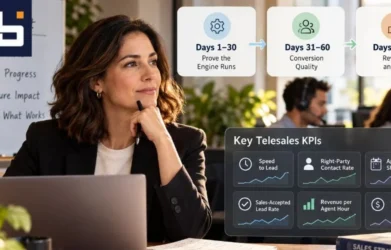
Businesses can evaluate lead quality more effectively when qualification criteria, follow-up procedures, and routing rules are clearly defined. Useful measures include contactability, data completeness, response time, qualification outcomes, and the number of qualified inquiries progressing to the next stage.
Organizations should review these measures regularly to identify recurring issues and improve their processes. They can also explore lead qualification services for financial institutions for additional industry-specific context.
Responsible data handling should remain part of the process. The Federal Trade Commission’s data security guidance for businesses explains why organizations should collect only the information they need and protect the data they retain.
For businesses that need operational support with reviewing and routing incoming inquiries, Boomsourcing provides lead qualification services to support a more consistent approach.
Contact Boomsourcing to discuss how Boomsourcing can support your lead qualification and follow-up workflows.


 Connect WITH US


 By Edgar Sainz

 By Nathan Brown