
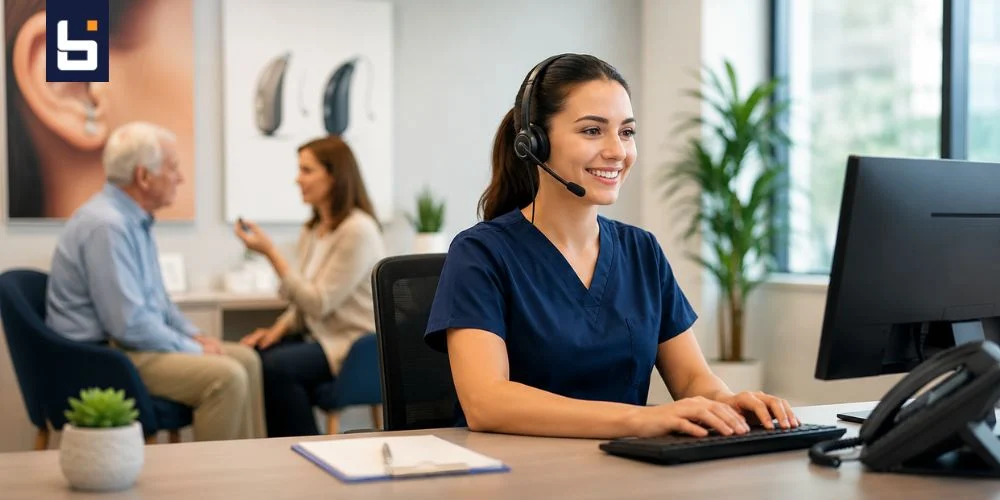
Hearing aid clinics live inside a strange contradiction. Patients need better hearing more than almost anything else on their calendar. Yet a shocking number of them simply never show up. Front desks call, text, and confirm, and the chair still sits empty. It is a little like planning a surprise party where the guest of honor forgets they were invited. This is the exact problem that hearing aid appointment scheduling services were built to solve, and clinics across the country are finally paying attention.
The Real Cost of a Missed Hearing Aid Appointment
No-shows are not a minor inconvenience. Across general healthcare, the national average no-show rate sits near 18 percent, with some specialties climbing far higher. In the US, the na tional average no-show rate across healthcare is approximately 18%, with some specialties seeing rates as high as 80% Audiology is particularly vulnerable. Healthcare no-show rates can range as high as 80% due to transportation barriers, diagnosis anxiety, and simple forgetfulness, and hearing loss carries its own emotional weight. Many patients quietly dread the appointment itself. They know they need hearing aids, yet stigma and denial keep pulling them away from the door.
The math gets uncomfortable fast. A single missed appointment costs a practice roughly $200, and missed visits add up to an estimated $150 billion in annual losses across the US healthcare system A busy multi-location clinic can lose thousands of dollars every month before anyone notices the pattern. Meanwhile, patient loyalty takes a hit too. Nearly 89 percent of people will purchase from a competitor following a poor experience, so a clunky scheduling process does not just cost one appointment. It quietly costs the whole relationship.
Why In-House Front Desks Struggle With Hearing Aid Clinic Patient Scheduling
Front-desk staff at most clinics wear five hats before lunch. They greet walk-ins, verify insurance, answer billing questions, and still try to catch every ringing phone. Consequently, hearing aid clinic patient scheduling often becomes the task that gets rushed. Reminder calls get skipped during busy weeks. Reschedules get logged incorrectly. Voicemails pile up after hours, and prospective patients who called after 5 p.m. rarely call back twice.
This is not a staffing failure so much as a math problem. One receptionist cannot realistically run a full-time call center while also managing the front counter. As a result, clinics either overstaff an expensive in-house team or accept a steady trickle of missed calls and no-shows as the cost of doing business. Neither option feels great, and both quietly drain revenue every single week.
How Audiology Call Center Outsourcing Solves the No-Show Problem
This is exactly where audiology call center outsourcing earns its reputation. Instead of stretching one overworked employee across ten responsibilities, clinics hand scheduling to a dedicated team trained specifically for hearing care conversations. These specialists know the difference between a routine hearing test and a hearing aid fitting, and they schedule accordingly. They also call back the leads that would otherwise vanish into a voicemail graveyard.
Patient experience expert Quint Studer put it plainly: “The front desk is the front line of patient retention.” When that front line runs on trained, dedicated agents instead of a stretched-thin employee, patients notice the difference immediately. Calls get answered faster. Confirmations happen consistently. Fewer patients slip through the cracks between booking and arrival.
Outsourced Hearing Aid Intake Calls Catch Patients Before They Drift Away
Intake is where most leads quietly disappear. A patient calls, asks a few questions, and hangs up “to think about it.” Without a structured follow-up process, that patient rarely calls back. Outsourced hearing aid intake calls fix this gap by treating every inquiry like a warm lead worth nurturing, not a box to check. Trained agents follow up within hours, not days, and that speed matters enormously. Outbound scheduling campaigns run by trained call center teams have converted as high as 20 percent of contacted patients into booked appointments, a number most in-house teams simply cannot match while juggling walk-in traffic.
Real Clinics, Real Results
Numbers matter more once you see them applied. One healthcare system partnered with an outsourced call center to overhaul its patient scheduling operations, and the results were dramatic. The partnership delivered a 99.7% improvement in speed to answer, a 75% reduction in no-show rates, and 800% growth in team size to match demand, according to a published case study from ROI CX Solutions. That is not a marginal improvement. That is the difference between a struggling schedule and a fully booked calendar.
Industry research backs this pattern up more broadly. According to a recent MGMA Stat Poll referenced by SkyCom, the average US no-show rate hovered near 6.81 percent among practices with strong scheduling infrastructure in 2023, well below the industry-wide average. Clinics that invest in dedicated scheduling support consistently land closer to that lower number, and audiologists notice the calendar difference within weeks, not months.
What to Look for in Hearing Aid Appointment Scheduling Services
Not every scheduling partner deserves your patient list. A strong provider understands hearing health terminology, HIPAA compliance, and the emotional nuance of talking someone into their first hearing test. Look for teams that offer live agents rather than pure automation, since older patients especially prefer a human voice on the line. Ask about reporting, too. You should see no-show rates, call volume, and conversion data every single month, not just a vague promise that things are improving.
Pricing structure matters as well. Some providers charge flat monthly fees, while others charge per call or per booked appointment. Therefore, clinics should match pricing models to their actual call volume instead of guessing. A quiet single-location practice has very different needs than a ten-clinic regional group, and the right partner adjusts accordingly.
The Bigger Debate: Outsourcing vs. In-House Control
Not everyone agrees outsourcing is the right move, and that debate is worth having openly. Some clinic owners worry that outsourced agents cannot replicate the warmth of a familiar receptionist who knows every patient by name. That concern is fair, and it deserves a real answer, not a dismissive one. However, most modern scheduling partners now train agents deeply on each client’s tone, scripts, and patient history, closing that gap significantly. The real question is not whether outsourcing feels impersonal. It is whether an overworked in-house team can deliver consistency at scale, and for many clinics, the honest answer is no.
Ready to Stop Losing Patients to Empty Chairs?
Every missed appointment represents a patient who still needs help hearing their grandchild’s laugh or a doorbell ring. That patient deserves a scheduling process that actually works. Boomsourcing builds hearing aid appointment scheduling services around exactly this problem, pairing trained intake specialists with reporting that clinics can actually use. If your calendar has more gaps than bookings, it might be time for a conversation about what dedicated scheduling support could look like for your clinic.


 Connect WITH US

 By Anik Banerjee
 By Nathan Brown

 By Bradley Call